Sixty Senegalese return home from South Africa
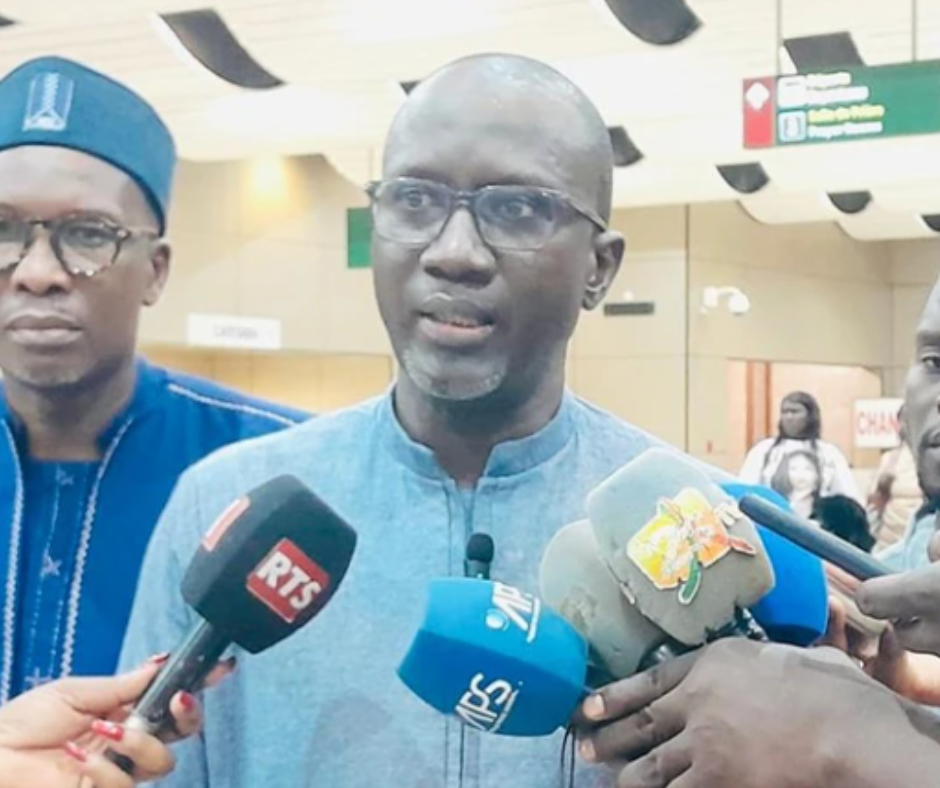
Sixty Senegalese repatriated from South Africa, including 23 children and about ten women, arrived Monday at Dakar airport where they were welcomed by the authorities, according to the director of Senegalese abroad, Abdou Karim Cissé.
“We welcomed 60 Senegalese today,” including 23 men. “As you can see, we have children, women and also men,” said Mr. Cissé, specifying that this repatriation comes in a context of difficulties encountered by foreign nationals in South Africa.
He explained that this operation was part of the instructions given by the President of the Republic, the Prime Minister and the Minister of African Integration, Foreign Affairs and Senegalese Abroad, to “accompany, protect, assist our compatriots abroad”.
“From the outset of the events, the situation was monitored at the ministry and government levels. And at each stage, our ambassador reported and followed up,” he stressed.
Abdou Karim Cissé also praised the work done by the Senegalese embassy in Pretoria, particularly by Ambassador Geneviève Faye and her team, in the process of identifying, registering and supporting Senegalese people wishing to return to the country.
“This is an opportunity for us, therefore, to warmly congratulate Ambassador Geneviève Faye, Ms. Manel, who has done an excellent job, and the entire embassy team, for carrying out this process, accompanying these compatriots, registering them and preparing their departure for full support by the government of Senegal,” he said.
The director of Senegalese abroad specified that a first group of about six to seven people had already arrived the previous week, while other compatriots could be repatriated in the coming days or months.
“It must also be remembered that these are people who want to return. It is partly the desire to return that prompted the ambassador, with his teams, to register them, guide them and support them,” he indicated.
A reintegration scheme
After their arrival in Senegal, repatriated persons benefit from a reception and monitoring system designed in particular to facilitate their reintegration.
According to Abdou Karim Cissé, the Directorate of Senegalese Abroad has, in the 14 regions of the country, Reception, Orientation and Follow-up Offices (BAOS), responsible for assisting returning migrants.
He specified that forms were drawn up to determine the profile of the repatriated people, their background and their plans, before their referral to the BAOS of their respective region.
“Reintegration takes many forms. There is psychosocial reintegration, because these people have been traumatized. They need support. They need guidance,” he said.
In addition to this, there is economic reintegration which can take the form of “project funding”, “training funding” or even “integration”, he added.
A call to avoid stigmatizing speech
Referring to the testimonies of repatriated Senegalese, the director of Senegalese abroad called for avoiding speeches that could stigmatize foreign communities living in Senegal.
“This is an opportunity for us, after listening to these people, to raise the alarm and say that we need to stop [stigmatizing foreigners],” he said.
“Senegal is a country of law. The laws must be respected,” he reminded, while praising the actions of the defense and security forces.
He stressed the need to avoid stigmatizing any particular community.
Senegal, known for being “a country of peace, a country of Teranga”, must also ensure that laws and regulations are respected by everyone living on its territory.
A repatriated woman testifies
Fatoumata Binetou Sidibé, known as Aïcha, one of the repatriated Senegalese, praised the support of the Senegalese embassy in South Africa.
She explained that she had lived in fear due to the difficulties faced by foreigners in South Africa.
“Because we were all afraid. I couldn’t work anymore,” she said, emphasizing that the checks and requests for documents contributed to reinforcing this fear.
She also reported hostile remarks made towards foreigners. “We don’t want any more foreigners. And foreigners shouldn’t have a salon here. We’ve experienced a lot of this,” Ms. Sidibé reported.
Source: APS