Gambia Political Debate: Call for Respect, Accountability and a Better Political Culture
By: Suntou Touray
Unless the crimes of political divorce still lingering in some quarters, speaking against political rudeness directed at leaders is something I did consistently. In fact, for those who brought the defence of Hon Ousainou Darboe, I defended him when it was unpalatable, unpopular and dangerous to do so. So Mr Ensa B Ceesay and those who share his argument against my stance can take their subtle defence of Binta Dibba elsewhere. I defended the Honour, dignity and political message of Hon Ousainou Darboe until we part ways, and not once have I ever mention him and disrespect him. Not because of anything, but he is an elder in our culture and society as well as a statesman.
I cannot help those who take offense that I decided to move on and part ways. However what is important to note is that, in democratic country people have the right to move on and find new grounds if ideological differences arise.
A Head of State deserves respect due to the position he holds. Elders and religious figures deserves respect. I have defended that fact for as long as I can remember.
Coming to the issue proper!!!!
WRONG COMPARISON – WHOSE WORDS CARRY MORE WEIGHT?
There is a serious flaw in the argument being made by those subtly defending Binta Dibba by asking, “What about Baba Jah?”
That is the wrong comparison. The real question is, What kind of political culture are we creating, and what responsibility do those with influence have to stop it?
Insults and political abuse did not begin with social media, nor did they begin with the current political generation. They have a long and dark history in Gambian politics.
Social media has simply taken what once happened at the bantaba or in small political gatherings (PPP, UP, NCP) and placed it before an entire nation instantly, repeatedly and permanently. We need historical revisions and eliminate all bad political cultures.
During the run-up to the 2016 elections, some activists made a habit of insulting former President Yahya Jammeh, even extending their insults to his mother. I was among those who openly condemned that behaviour because I understood then that insults do not solve political problems; they create a culture of hostility.
What many people did not know at the time was that the NIA itself exploited similar tactics. Through infiltration, provocation and abusive language, security operatives discredited political activity and create circumstances that facilitated the arrest and detention of people considered persons of interest.
That experience reinforced something I have always believed. Insults are not harmless. They create a culture and cultures have consequences.
During Yahya Jammeh’s rule, GRTS became a powerful vehicle for his political messaging. He routinely used national broadcasts to ridicule, threaten, castigate and disrespect political opponents and even elders.
Young Gambians were watching. They were learning.
When the most powerful person in a country repeatedly demonstrates that disagreement can be answered with humiliation, intimidation and personal attacks, society eventually begins to normalize that behaviour.
So when we ask why political discourse in The Gambia has become so aggressive, we must look beyond Facebook, WhatsApp and TikTok.
Social media is the amplifier. The culture was already there. Then came 2017 and 2018, 2019, 2020 to 2021 elections.
An undercurrent of political tension and power struggle emerged within the UDP. A group of political commentators began a sustained campaign of harsh and personal attacks against President Adama Barrow.
Some openly identified themselves as supporters of Hon. Ousainou Darboe. The attacks became increasingly personal. The President was insulted. His mother was insulted. His heritage was attacked. His associates were attacked. Anyone perceived to be close to him could become a target.
WhatsApp groups were created where supporters and associates of the President were openly subjected to insults and personal attacks.
We warned against this culture. I personally called out some of our own supporters and advised them to stop. I was even branded a tribalist for telling some young people that certain insults, particularly those expressed in our own languages, were deeply hurtful, bad and offensive.
I was not defending a politician. I was defending a principle. I could already see where this culture could lead. Unfortunately, political anger often overwhelms rational judgment. Some people became so consumed by their opposition to President Barrow that insulting him became an acceptable form of political expression. And, predictably, some of his supporters responded in kind.
That is how the cycle continues. You insult me. I insult you. You escalate. I retaliate. And eventually, everybody claims the other person started it. But two wrongs do not become right because one happened first. And this brings us to the issue that is too often avoided –
THE WORDS OF POLITICAL LEADERS MATTER.
They matter because people listen to their leaders. They defend their leaders. They imitate their leaders. And sometimes, they act on what they believe their leaders want. When a leader clearly condemns abuse, supporters receive a clear message.
When a leader remains silent, supporters may interpret that silence as permission. And when a leader encourages aggressive rhetoric, the consequences can be even more dangerous.
That is why both President Adama Barrow and Hon. Ousainou Darboe have an enormous responsibility to help sanitize political discourse among their supporters.
This is not about who is right or wrong politically. It is about the standard we expect from those who command influence. I have consistently condemned disrespect against political leaders, regardless of who the leader is. Where I have had access to people involved in these confrontations, I have personally advised them against retaliation.
I have never subscribed to the argument that because someone insults you, you are therefore entitled to insult them back. Two wrongs do not become right because one happened first.
Consider Hon. Fatoumata Jawara.
She suffered tremendously at the hands of NIA agents and endured experiences no human being should have been subjected to. She remained a firm supporter of the UDP and its leader, Hon. Ousainou Darboe.
Yet, after being added to a WhatsApp group controlled by some UDP supporters, she was reportedly subjected to days of insults, including people justifying the torture and suffering she had endured simply because she stayed with President Barrow.
Eventually, she retaliated against the UDP leader. I did not condone her retaliation. But I could understand her anger. I could understand her pain. And I believe a clear condemnation of the attacks against her from the UDP leadership could potentially have prevented the situation from escalating.
Understanding someone’s pain is not the same as endorsing their response. The same standard must apply to everyone. And that brings me to Binta Dibba.
WHAT BINTA DIBBA DID WAS OUT OF ORDER.
It was vulgar, rude and inappropriate particularly coming from a young person.
We should not teach young Gambians that political disagreement requires vulgarity, or that strength is demonstrated through disrespect.
At the same time, I do not condone Baba Jah’s streams when he discusses private relationships involving Hon. Ousainou Darboe. Those matters do not interest me, and as a Muslim, I have no interest in participating in or encouraging such discussions. I worked for years defending Hon Ousainou Darboe in all forms and at many levels. Hence, the highest respect I have for him remains and will never falter simply because we don’t share the same political entity today. I am a traditionalist true and true. I will not accept anyone insulting Hon Ousainou just like I will not accept anyone insulting President Adama Barrow, or any elder in the Gambia.
But that still does not make Binta Dibba’s conduct acceptable. Condemning one does not require defending the other.
That is the fundamental point being missed.
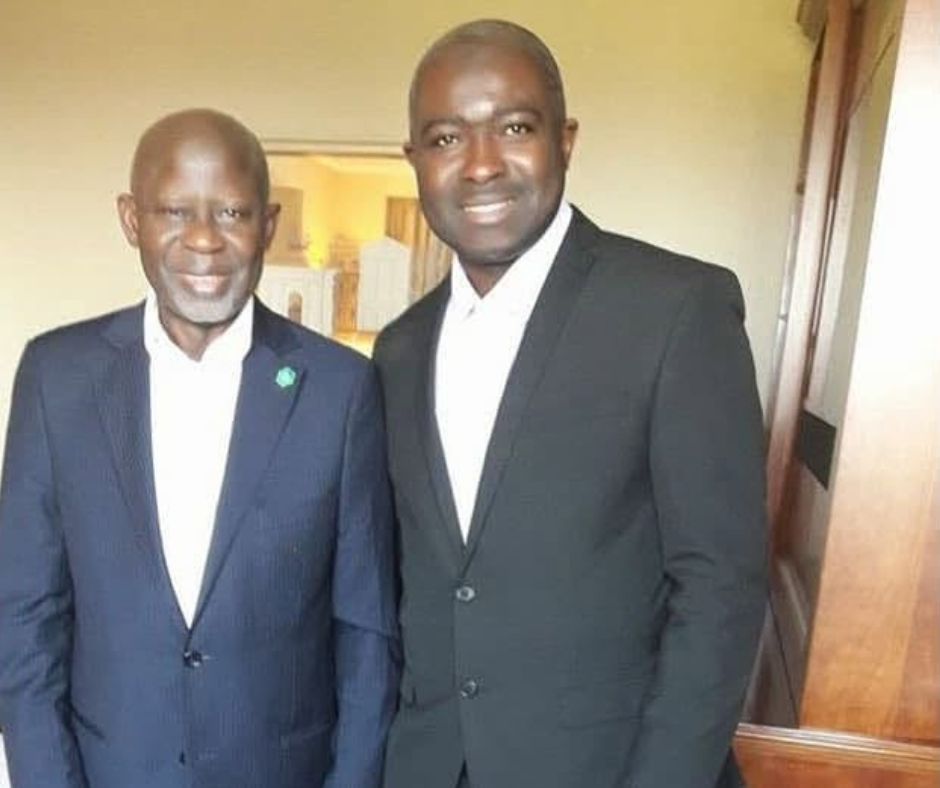
And using photographs of me publicly engaging with people as political evidence is equally absurd. As a public officer, I interact with people across the political spectrum. I take photographs with people of different political views, including activists who strongly oppose the government.
I do not discriminate in the execution of my public duties. The Gambia cannot build a healthy democracy by replacing one culture of intimidation and disrespect with another.
We cannot condemn Yahya Jammeh’s culture of abuse while reproducing the same culture against people we dislike. We cannot demand respect for our own leaders while celebrating the humiliation of somebody else’s. And we cannot pretend that the words of political leaders and influential political actors carry no weight.
They do. Their words carry weight because people listen. People imitate. People defend. People retaliate. That is precisely why leaders and influential political actors must use their platforms to lower the political temperature, not raise it.
The Gambia has already paid a heavy price for political intolerance. We should know better by now.
What kind of political culture do we want to leave for the next generation?
A culture where political disagreement is a licence for hatred, vulgarity and humiliation? Or a democracy where we can be politically fierce without becoming personally abusive?
We can disagree without destroying one another. We can fight for our convictions without losing our dignity. And above all.
This is my final take on this. I remain silent on many false accusations not because it cannot be debunk, but sometimes it is unnecessary.
WE CAN BE POLITICALLY FIERCE WITHOUT LOSING OUR HUMANITY.