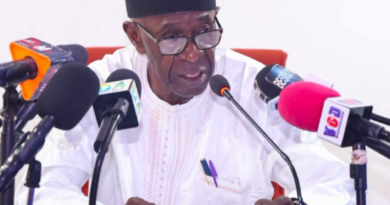
PUBLIC STATEMENT ON CONCERNS REGARDING RECENT STATEMENTS ATTRIBUTED TO COMMISSIONER IMAM BABA LEIGH
The National Human Rights Commission (NHRC) has taken note of the concerns and comments expressed by members of the public, including on this page, regarding recent statements attributed to Commissioner Imam Baba Leigh, as well as calls for his removal from office.
The Commission fully appreciates the seriousness of the concerns that have been raised and understands why the statements have generated considerable public discussion and concern. The NHRC takes matters relating to tribalism, hate speech, discrimination, intolerance and statements capable of undermining peaceful coexistence very seriously.
I wish to assure members of the public that the NHRC has not ignored the matter. A number of individual complaints have been formally submitted to the Commission. These complaints have been duly received and acknowledged, and the Commission has commenced its own investigation into the matter through its Directorate of Legal and Investigation (DLI).
The DLI is examining the statements, the circumstances and context in which they were made and all other relevant issues. As part of this process, the Directorate will also engage Commissioner Leigh and other relevant persons as necessary. At the conclusion of the investigation, the DLI will submit its findings, legal opinion and recommendations to the Commission for consideration.
It is important to explain that the reason the NHRC has so far refrained from making a substantive public pronouncement on the merits of the matter is precisely because the investigation is ongoing. The Commission believes that it would be inappropriate to prejudge the matter, particularly when complaints have been formally lodged and the Commission’s own investigative process is underway.
Commissioner Leigh was on annual leave when the statements were made and was not representing the NHRC or speaking on behalf of the Commission in any official capacity. Following the public reaction, he issued a public statement explaining and providing context to his utterances and made it clear that he was speaking in his personal capacity and not on behalf of the NHRC. He subsequently issued an apology in the local language to the Mandinka community and to those who felt offended by his comments.
The Commission takes note of these subsequent developments. However, whether the explanation or apology is considered adequate, and whether any further action is warranted, are matters that should properly be considered in light of the facts and findings arising from the investigation.
I also wish to clarify that the removal of an NHRC Commissioner is not a matter that can simply be decided by the Chairperson. The appointment, tenure and removal of Commissioners are governed by the NHRC Act and the applicable legal framework. Any removal must therefore follow the process prescribed by law and cannot properly be determined simply on the basis of public sentiment, pressure or demands, however strongly expressed.
This should not be understood as the Commission seeking to shield any individual from accountability. On the contrary, the best protection against impunity is a fair, independent and lawful process that establishes the facts and allows the appropriate institution to make a determination based on evidence and the law.
The NHRC has consistently maintained that it has zero tolerance for hate speech, tribalism, religious intolerance and discrimination, regardless of who makes the statement or which community is affected. The Commission has conducted and published a study on hate speech, engaged political parties and other stakeholders on the dangers of divisive rhetoric, and has undertaken national advocacy and dialogue aimed at promoting tolerance, peaceful coexistence and social cohesion.
Our commitment to these principles must be consistent. We must be prepared to condemn hate speech, tribalism, religious intolerance and discrimination wherever they occur and regardless of who is responsible. Human rights and equality cannot be applied selectively.
We therefore respectfully appeal to members of the public to allow the NHRC to discharge its mandate and follow the due process required by law. The Commission will consider the findings and recommendations of the Directorate of Legal and Investigation when they are presented and will take whatever action falls within its mandate and is justified by the facts and the law.
The fact that the Commission has not yet made a public determination should not be interpreted as inaction. Investigating a complaint, establishing the facts and following due process are themselves essential parts of the pursuit of accountability and justice.
We thank members of the public for their vigilance and for holding institutions accountable. We only ask that the NHRC be afforded the same opportunity that we would expect any other institution to have: the opportunity to establish the facts, apply the law fairly and arrive at a considered and impartial determination, notwithstanding the sentiments and emotions that may surround the matter.
The NHRC remains committed to protecting the rights and dignity of all persons in The Gambia and to promoting a society founded on equality, non-discrimination, tolerance, mutual respect and peaceful coexistence.
Emmanuel Daniel Joof
Chairperson
National Human Rights Commission of The Gambia